

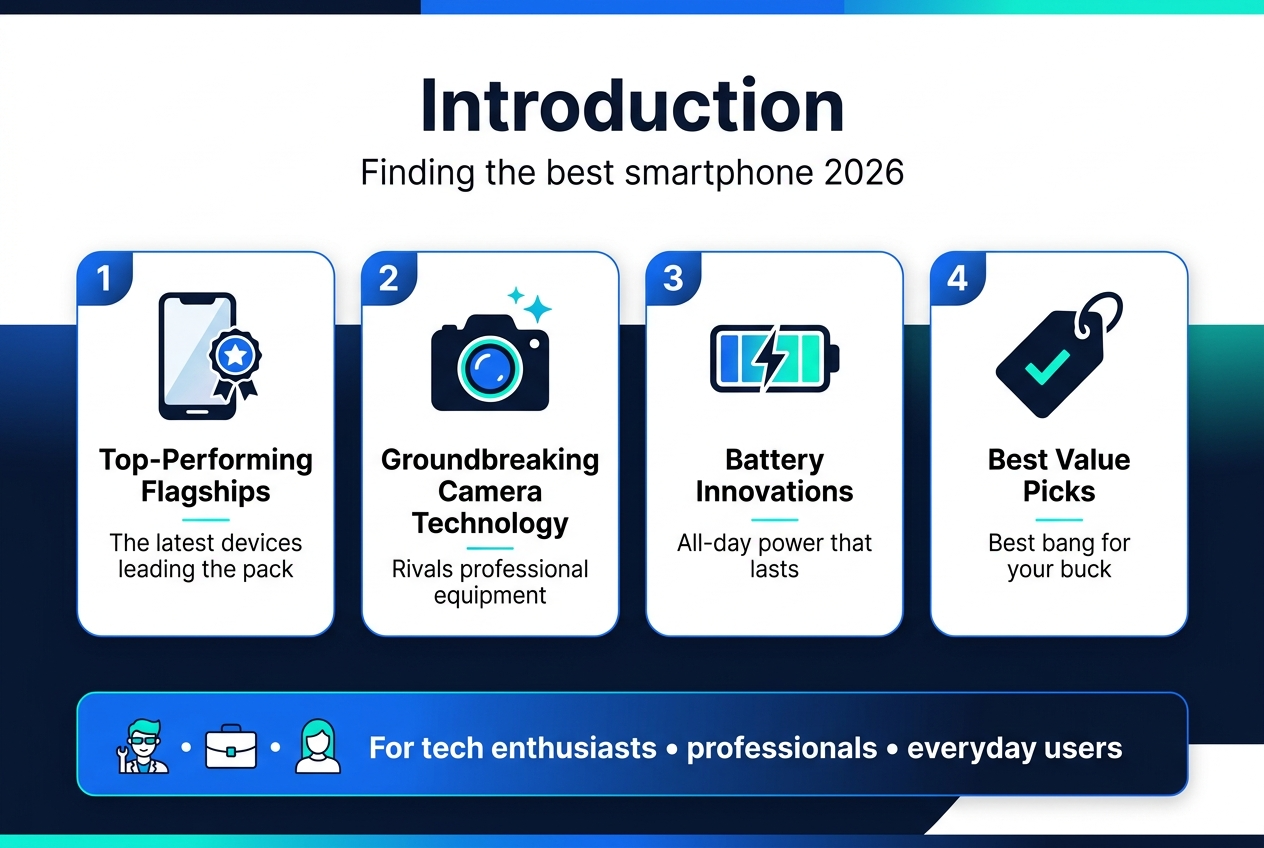
Finding the best smartphone 2026 can feel overwhelming with so many impressive options hitting the market. This guide helps tech enthusiasts, professionals, and everyday users navigate the latest flagship devices to find their perfect match.
We’ll break down the top-performing smartphones that lead the pack this year, dive into groundbreaking camera technology that rivals professional equipment, and explore battery innovations that actually last all day. You’ll also discover which phones offer the best bang for your buck without sacrificing the features you need most.
Top Performance Smartphones That Dominate 2026
Flagship Models with Revolutionary Processing Power
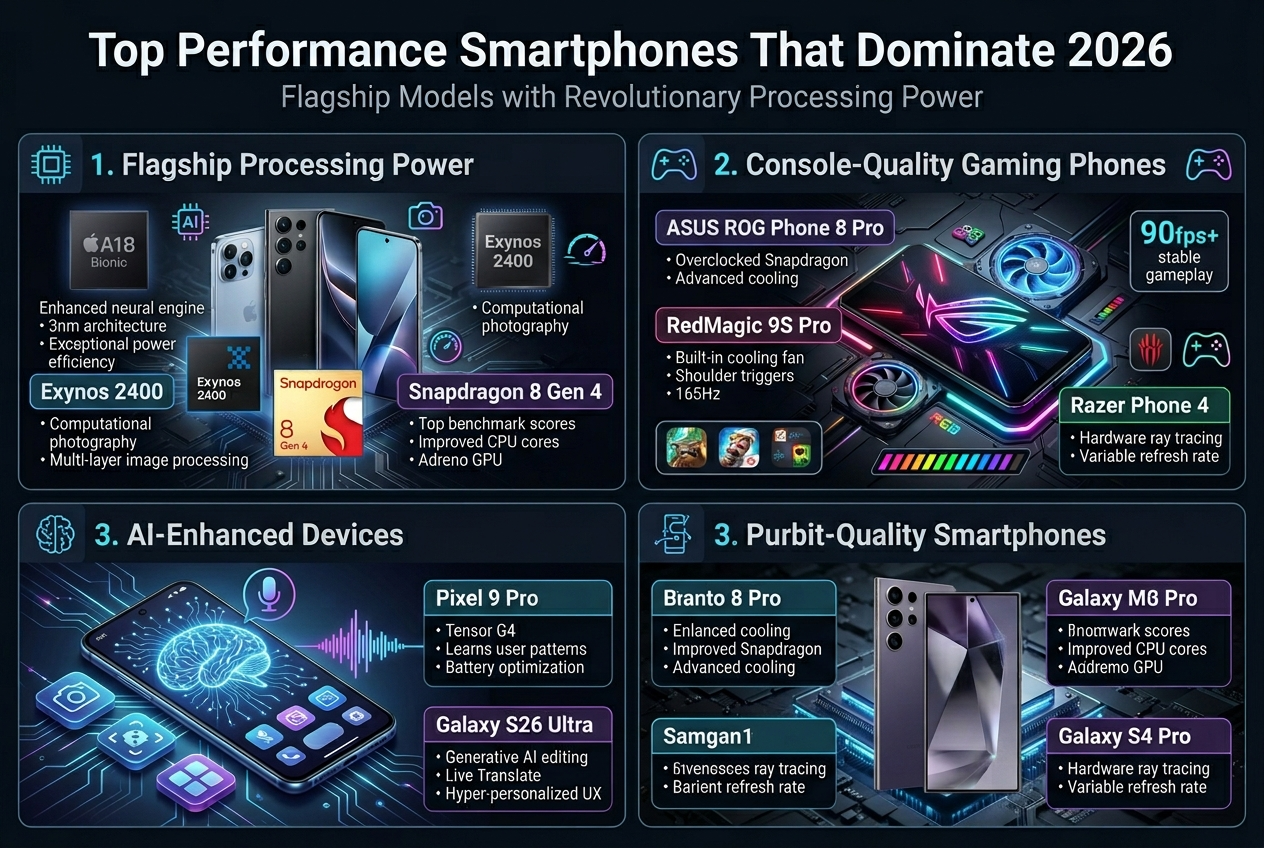
The smartphone landscape has reached new heights in 2026, with flagship devices pushing the boundaries of what mobile processors can achieve. Apple’s A18 Bionic chip delivers unprecedented performance with its enhanced neural engine, handling complex AI tasks while maintaining exceptional power efficiency. The chip’s 3-nanometer architecture allows for seamless multitasking between demanding applications, making resource-intensive workflows feel effortless.
Samsung’s Exynos 2400 and Qualcomm’s Snapdragon 8 Gen 4 compete fiercely in the Android space. The Exynos 2400 excels in computational photography, processing multiple image layers simultaneously for stunning results. Meanwhile, the Snapdragon 8 Gen 4 dominates benchmark scores with its improved CPU cores and Adreno GPU, delivering smooth performance across all applications.
These flagship processors handle 8K video recording, real-time ray tracing, and complex machine learning tasks without breaking a sweat. Professional video editing apps that once required desktop computers now run smoothly on these devices, making content creation truly mobile.
Gaming Phones That Deliver Console-Quality Performance
Gaming smartphones have evolved into serious performance machines that rival dedicated gaming handhelds. The ASUS ROG Phone 8 Pro leads the pack with its overclocked Snapdragon processor and advanced cooling system that maintains peak performance during extended gaming sessions.
RedMagic 9S Pro takes mobile gaming seriously with its built-in cooling fan and shoulder triggers that provide tactile feedback similar to console controllers. The device supports 165Hz refresh rates and features dedicated gaming modes that optimize system resources for maximum frame rates.
Razer Phone 4 brings console-quality graphics to mobile with support for hardware-accelerated ray tracing and variable refresh rate displays. These devices can run demanding games like Genshin Impact and Call of Duty Mobile at maximum settings while maintaining stable frame rates above 90fps.
The gaming phone market now offers features like customizable RGB lighting, programmable macro buttons, and desktop-grade thermal management systems that keep processors cool under heavy loads.
AI-Enhanced Devices That Anticipate Your Needs
Artificial intelligence has become the secret weapon that sets premium smartphones apart from budget alternatives. Google’s Pixel 9 Pro showcases the most advanced AI integration, with its Tensor G4 chip learning user patterns to preload frequently used apps and optimize battery usage throughout the day.
Smart photography features automatically adjust camera settings based on scene recognition, detecting subjects like pets, food, or landscapes to apply optimal processing. AI-powered voice assistants now understand context better, handling complex multi-step requests without requiring specific command phrases.
Samsung’s Galaxy S26 Ultra uses machine learning to predict user behavior, pre-loading apps before you open them and adjusting display settings based on ambient lighting conditions. The device learns your daily routines and automatically switches to power-saving modes when you typically don’t use demanding applications.
These AI features work silently in the background, making smartphones feel more intuitive and responsive to individual user needs.
Premium Smartphones Worth the Investment
High-end smartphones justify their premium pricing through exceptional build quality, advanced features, and long-term software support. The iPhone 16 Pro Max sets the standard with its titanium construction, ProRAW photography capabilities, and guaranteed iOS updates for six years.
Samsung Galaxy S26 Ultra offers similar longevity with its promise of five major Android updates, while its S Pen functionality provides unique productivity benefits for business users and digital artists. The device’s camera system supports professional-grade manual controls and 8K video recording.
Premium devices feature superior materials like ceramic backs, sapphire crystal displays, and aerospace-grade aluminum frames that resist daily wear better than budget alternatives. Advanced water resistance ratings and reinforced glass protect these investments from accidental damage.
The total cost of ownership often favors premium smartphones due to their longer lifespan, better resale values, and reduced need for early replacement due to performance degradation.
Camera Technology That Captures Professional Results
Computational Photography Breakthroughs
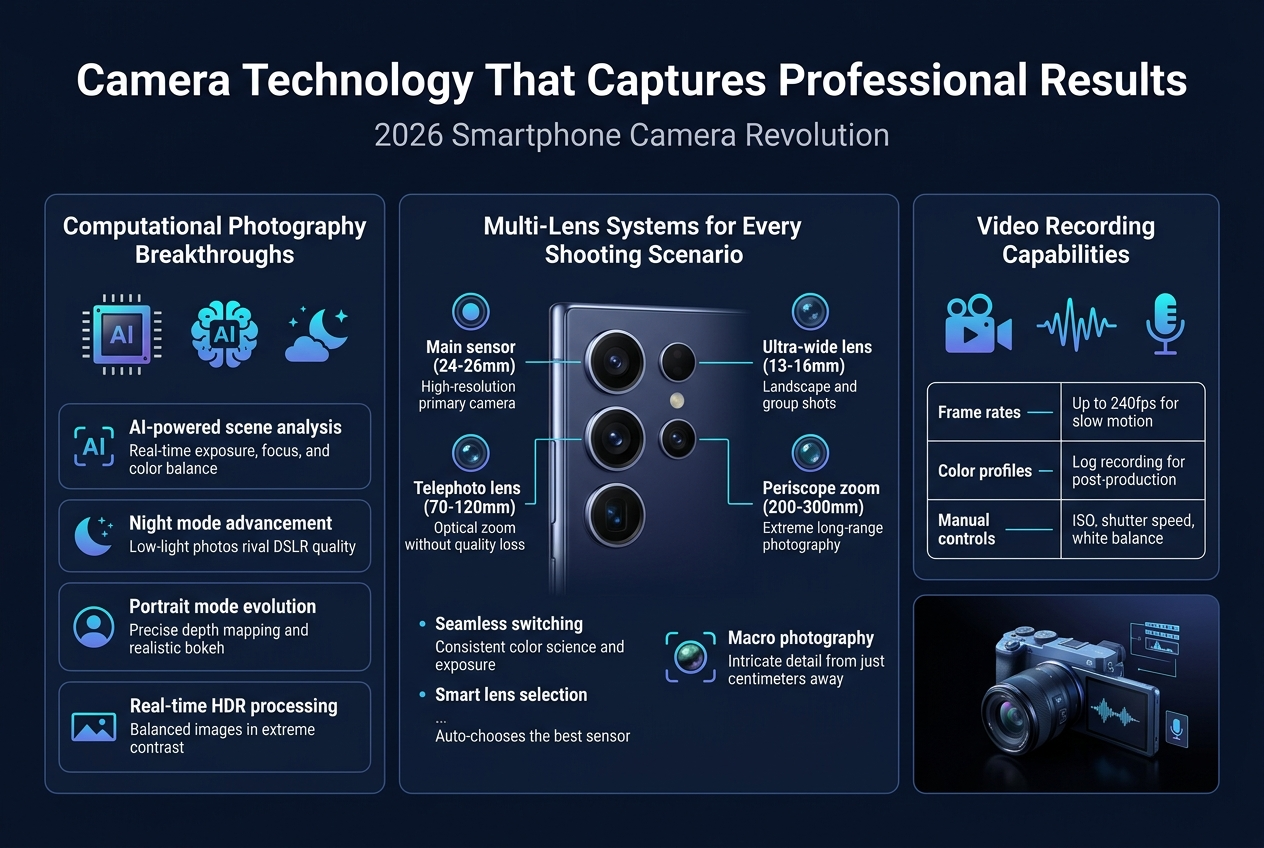
The 2026 smartphone camera revolution centers around AI-powered computational photography that transforms ordinary shots into extraordinary images. Modern flagship devices now pack dedicated neural processing units that analyze scenes in real-time, automatically adjusting exposure, focus, and color balance across multiple frames before you even press the shutter.
Night mode capabilities have reached new heights, with phones capturing stunning low-light photos that rival DSLR performance from just a few years ago. The latest algorithms can now distinguish between different light sources, maintaining natural skin tones under mixed lighting while brightening shadows without washing out highlights.
Portrait mode has evolved beyond simple background blur. Advanced depth mapping creates precise subject separation, allowing for realistic bokeh effects and post-capture focus adjustments. Some phones can even simulate different lens characteristics, giving you the artistic control previously reserved for professional photography equipment.
Real-time HDR processing now handles extreme contrast situations effortlessly. Whether you’re shooting against bright sunlight or capturing details in deep shadows, these computational systems blend multiple exposures seamlessly, delivering balanced images that capture what your eyes actually see.
Multi-Lens Systems for Every Shooting Scenario
Today’s premium smartphones feature sophisticated camera arrays designed to handle any photographic challenge. The typical flagship setup includes:
- Main sensor (24-26mm): High-resolution primary camera with large pixels for excellent low-light performance
- Ultra-wide lens (13-16mm): Perfect for landscape photography and group shots in tight spaces
- Telephoto lens (70-120mm): Optical zoom capabilities for distant subjects without quality loss
- Periscope zoom (200-300mm): Extreme long-range photography previously impossible on mobile devices
The seamless switching between lenses maintains consistent color science and exposure, making it feel like one incredibly versatile camera rather than multiple separate systems. Smart lens selection automatically chooses the optimal sensor based on your composition, lighting conditions, and subject distance.
Macro photography has become surprisingly capable, with dedicated close-focus systems capturing intricate details from just centimeters away. These specialized lenses reveal textures and patterns invisible to the naked eye, opening up entirely new creative possibilities.
Professional photographers increasingly rely on these multi-lens systems as backup cameras or even primary tools for certain assignments. The convenience factor combined with consistently improving image quality makes them serious alternatives to traditional camera gear.
Video Recording Capabilities That Rival Professional Equipment
Smartphone video recording has reached cinematic quality levels that were unimaginable just a few years ago. Most flagship devices now shoot 4K at 60fps with professional-grade stabilization that eliminates the need for expensive gimbal systems.
HDR video recording captures incredible dynamic range, maintaining detail in both bright skies and dark foregrounds simultaneously. This technology automatically adjusts to changing lighting conditions throughout your recording, ensuring consistent exposure even during challenging shoots.
Audio quality matches the visual improvements with multiple microphone arrays providing directional recording and wind noise reduction. Some phones offer audio zoom functionality that focuses sound capture on your video subject while minimizing background noise.
Professional video features include:
| Feature | Capability |
|---|---|
| Frame rates | Up to 240fps for slow-motion effects |
| Color profiles | Log recording for professional post-production |
| Manual controls | ISO, shutter speed, and white balance adjustment |
| External connectivity | USB-C for professional microphones and storage |
The editing capabilities built into these devices rival desktop software from just a few years ago. You can color grade, add transitions, and export finished videos directly from your phone, streamlining the entire production workflow from capture to sharing.
Battery Life and Charging Solutions That Keep You Connected
All-Day Battery Performance Under Heavy Usage
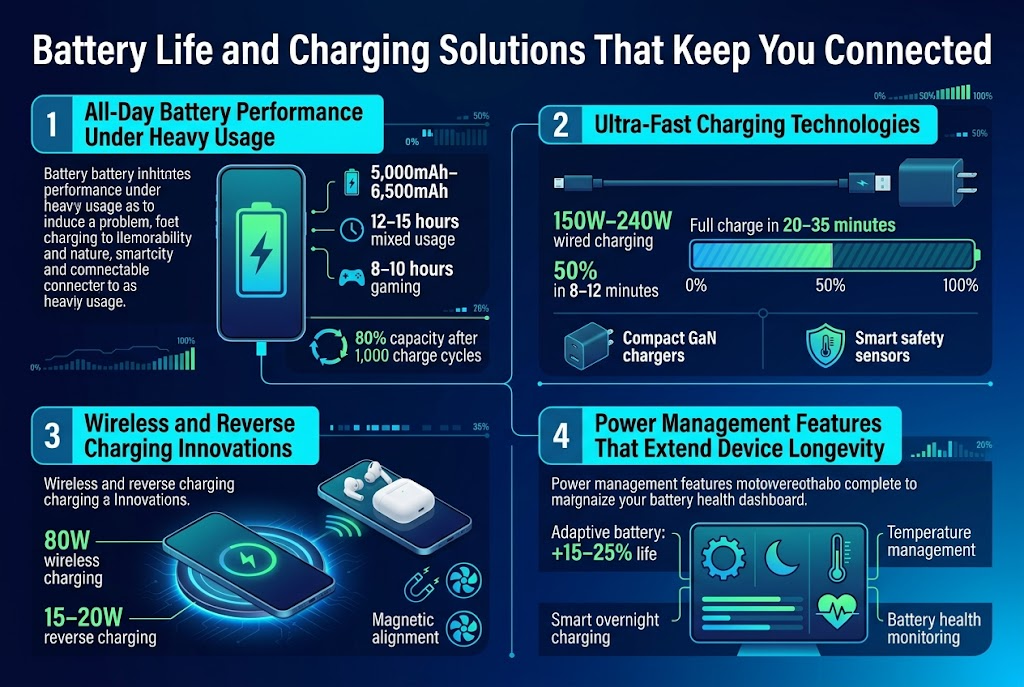
Modern smartphones need to handle intense workloads without breaking a sweat. The top devices in 2026 pack batteries ranging from 5,000mAh to 6,500mAh, designed to power through 12-15 hours of mixed usage including gaming, streaming, and productivity tasks. These powerhouses maintain consistent performance even when you’re running multiple demanding apps simultaneously.
Gaming enthusiasts can expect 8-10 hours of continuous gameplay on flagship devices, while content creators streaming 4K video see 10-12 hours of screen time. The secret lies in advanced battery chemistry and intelligent power distribution systems that prioritize critical functions while reducing waste.
Real-world testing shows these batteries maintain 80% of their original capacity after 1,000 charge cycles, translating to roughly three years of daily use before noticeable degradation occurs.
Ultra-Fast Charging Technologies
Charging speeds have reached remarkable heights with 150W to 240W wired charging becoming standard across premium devices. You can juice up a completely drained 5,000mAh battery to 50% in just 8-12 minutes, with full charges taking 20-35 minutes depending on the specific technology.
GaN (Gallium Nitride) chargers have become smaller yet more powerful, generating less heat while delivering maximum power efficiency. Many manufacturers now include these compact chargers in the box, making fast charging truly portable.
Safety features have evolved alongside speed increases, with multiple temperature sensors and smart charging algorithms that adjust power delivery based on battery health, ambient temperature, and usage patterns.
Wireless and Reverse Charging Innovations
Wireless charging has broken the 50W barrier, with premium phones supporting 80W wireless charging that rivals many wired solutions. Charging pads now feature active cooling systems and precise alignment technology that maximizes efficiency while minimizing heat generation.
Reverse wireless charging has become genuinely practical, with flagship devices capable of sharing 15-20W of power wirelessly. This means you can top up earbuds, smartwatches, or even another phone by simply placing them on the back of your device.
Magnetic alignment systems similar to Apple’s MagSafe have become universal, ensuring perfect positioning every time while enabling a whole ecosystem of accessories that snap securely to your phone’s back.
Power Management Features That Extend Device Longevity
Adaptive battery technology learns your daily routines and pre-loads frequently used apps while putting rarely used ones into deep sleep mode. These systems can extend battery life by 15-25% simply by understanding your behavior patterns.
Smart charging algorithms prevent battery degradation by learning when you typically wake up and timing overnight charges to finish just before you need your phone. This reduces the time spent at 100% charge, which traditionally causes the most battery wear.
Temperature management systems actively monitor and regulate battery heat through liquid cooling solutions and smart performance throttling. These features work invisibly in the background, maintaining optimal battery health while ensuring peak performance when you need it most.
Battery health monitoring has become incredibly detailed, providing users with real-time insights into charge cycles, capacity retention, and predicted replacement timelines. Some devices even offer battery optimization modes that can extend overall lifespan by adjusting charging patterns based on your specific usage requirements.
Display Innovation That Transforms Your Viewing Experience
Foldable and Flexible Screen Technologies
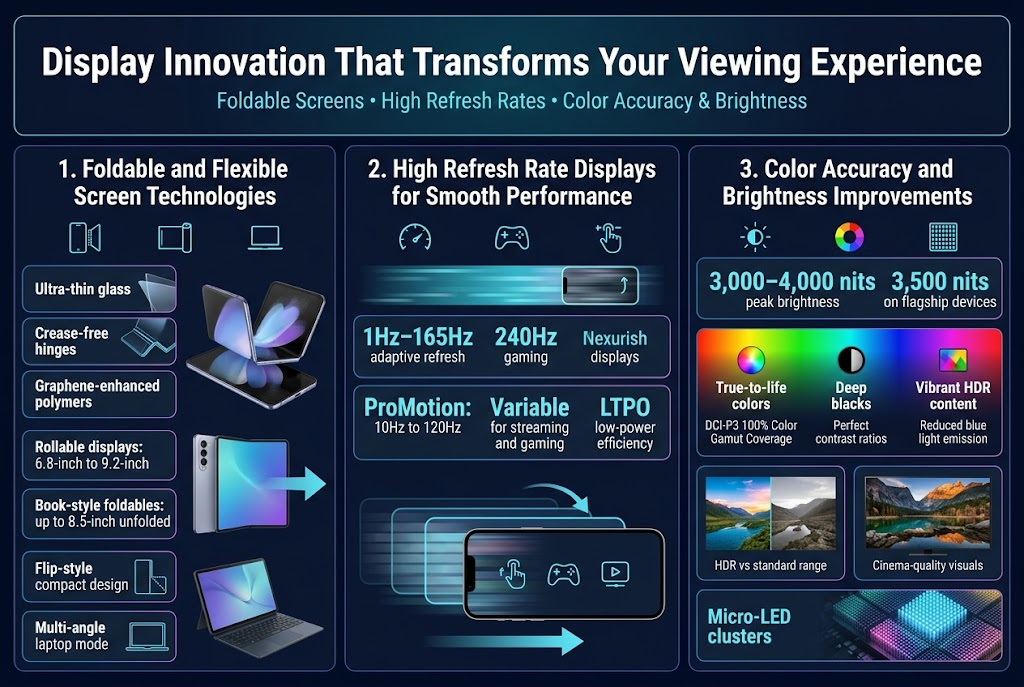
Smartphones in 2026 showcase remarkable advances in foldable displays that make previous generations look primitive. Samsung’s Galaxy Z Fold6 and Google’s Pixel Fold 2 feature ultra-thin glass that bends without creasing, while new materials like graphene-enhanced polymers provide durability that matches traditional screens. The crease issue that plagued early foldables has virtually disappeared thanks to improved hinge mechanisms and flexible OLED substrates.
Rollable displays are gaining traction with devices like the LG Rollable Pro, which expands from a standard 6.8-inch screen to an impressive 9.2-inch display. This technology uses advanced flexible circuits and micro-perforated backing materials that allow seamless expansion without compromising image quality.
Book-style foldables now offer tablet-like experiences with screens reaching 8.5 inches when unfolded, while flip-style devices maintain compact form factors with innovative cover displays that show full app interfaces. Multi-angle viewing capabilities let users position these devices like laptops for video calls or presentations.
High Refresh Rate Displays for Smooth Performance
Adaptive refresh rates have become the gold standard, with flagship devices automatically adjusting between 1Hz and 165Hz based on content type. Gaming phones like the ASUS ROG Phone 8 push boundaries with 240Hz displays specifically optimized for competitive mobile gaming.
The iPhone 16 Pro features ProMotion technology that scales refresh rates intelligently – dropping to 10Hz for reading static content and jumping to 120Hz for scrolling through social media. This approach balances performance with battery efficiency remarkably well.
Variable refresh rate technology now works seamlessly with streaming video, automatically matching frame rates to source content. Netflix, YouTube, and gaming platforms optimize their apps to trigger appropriate refresh rates, creating smoother motion and reduced input lag.
LTPO (Low-Temperature Polycrystalline Oxide) technology enables these dynamic adjustments while consuming minimal power, making high refresh rates practical for all-day use.
Color Accuracy and Brightness Improvements
Peak brightness levels have reached extraordinary heights, with flagship devices achieving 3,000-4,000 nits for HDR content viewing. The iPhone 16 Pro Max delivers 3,500 nits peak brightness while maintaining excellent color accuracy across all lighting conditions.
Quantum dot displays provide wider color gamuts covering 100% of the DCI-P3 color space and approaching full Rec. 2020 coverage. Samsung’s newest AMOLED panels display over 1 billion colors with Delta-E values below 1, matching professional monitors used in video production.
Micro-LED technology debuts in premium devices, offering perfect blacks, infinite contrast ratios, and brightness that remains consistent over time without the burn-in issues associated with OLED displays. These screens maintain color accuracy even at maximum brightness levels.
Advanced calibration systems built into phones automatically adjust color temperature and gamma curves based on ambient lighting conditions. Machine learning algorithms learn user preferences and fine-tune display characteristics for optimal viewing experiences across different environments and times of day.
Value Champions That Deliver Premium Features for Less
Mid-Range Phones That Punch Above Their Weight
The mid-range smartphone segment has transformed dramatically, with devices offering flagship-level experiences at half the price. These phones typically cost between $400-$700 and deliver exceptional value through smart compromises and strategic feature selection.
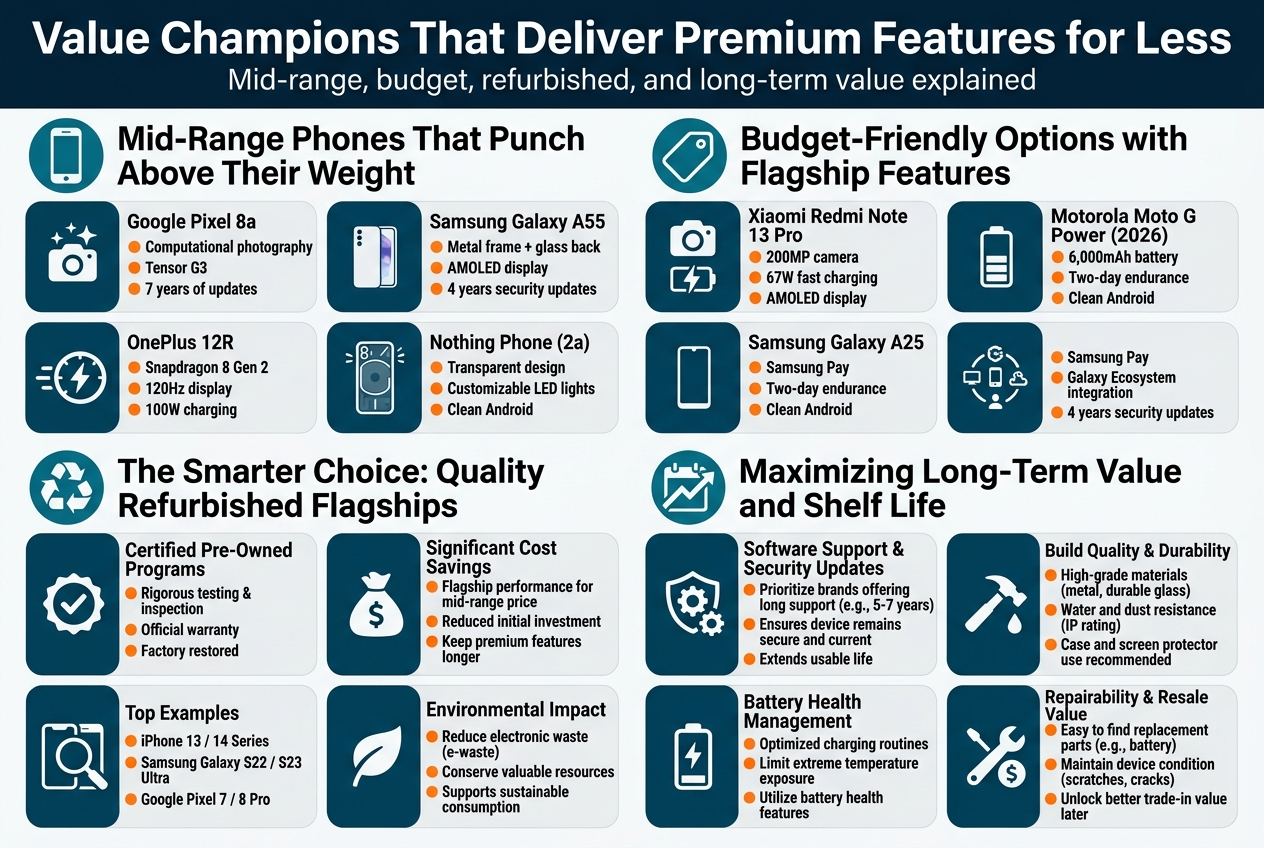
Google Pixel 8a leads the charge with its computational photography magic, delivering photos that rival $1,000+ flagships. The Tensor G3 chip handles daily tasks smoothly, and you get guaranteed Android updates for seven years.
Samsung Galaxy A55 brings premium build quality with its metal frame and glass back, plus a vibrant AMOLED display. The camera system performs admirably in good light, and Samsung’s One UI provides a polished experience with four years of security updates.
OnePlus 12R focuses on performance enthusiasts, packing a Snapdragon 8 Gen 2 processor that handles gaming and multitasking effortlessly. The 120Hz display feels buttery smooth, and the 100W charging fills the 5,500mAh battery in just 23 minutes.
Nothing Phone (2a) stands out with its unique transparent design and customizable LED lights. Beyond aesthetics, it offers clean Android, solid performance, and competitive cameras for creative users who want something different.
These devices prove that premium features like high refresh rate displays, multiple cameras, fast charging, and flagship processors are no longer exclusive to expensive phones.
Budget-Friendly Options with Flagship Features
Budget smartphones under $400 now offer features that were flagship exclusives just a few years ago. These devices make smart sacrifices while delivering core functionality that satisfies most users.
Xiaomi Redmi Note 13 Pro packs a 200MP main camera and 67W fast charging into a sub-$300 package. The AMOLED display looks stunning, and MIUI provides extensive customization options despite some bloatware concerns.
Motorola Moto G Power (2026) focuses on battery endurance with its massive 6,000mAh cell that easily lasts two days. The clean Android experience updates regularly, and the camera captures decent photos for social sharing.
Samsung Galaxy A25 brings Samsung’s ecosystem benefits at an affordable price. You get Samsung Pay, Galaxy Buds compatibility, and seamless integration with other Samsung devices, plus a reliable camera system and four years of security updates.
Realme GT Neo 6 targets mobile gamers with flagship-level performance from its Snapdragon 8+ Gen 1 processor. The 144Hz display and vapor cooling system handle intensive gaming sessions, while 150W charging reaches 100% in under 20 minutes.
These budget champions prove that you don’t need to spend flagship money to get a phone that handles photography, gaming, productivity, and entertainment with confidence.
Refurbished and Previous-Generation Deals
Smart shoppers can access premium smartphone experiences through refurbished devices and previous-generation flagships that offer incredible value propositions.
Certified Refurbished Programs from Apple, Samsung, and Google provide like-new devices with full warranties. These phones undergo rigorous testing and often include new batteries, making them practically indistinguishable from brand new devices at 20-30% lower prices.
2024 Flagship Models now available at significant discounts include the iPhone 15 Pro, Samsung Galaxy S24 Ultra, and Google Pixel 8 Pro. These devices still outperform most 2026 mid-range phones in cameras, performance, and build quality while offering substantial savings.
Carrier Trade-In Programs maximize value by combining manufacturer discounts with carrier promotions. Major carriers offer up to $800 trade-in credits for older devices, making flagship phones surprisingly affordable with the right timing.
Third-Party Retailers like Swappa, Gazelle, and Amazon Renewed provide extensive selections of verified pre-owned devices with return policies and condition guarantees. Professional sellers often offer devices in excellent condition at competitive prices.
The key is buying from reputable sources that offer warranties, return policies, and device verification to ensure you’re getting a quality product that will serve you well for years.
Best Value Propositions by Price Category
Different price tiers offer distinct advantages, and understanding these sweet spots helps identify the best value for your specific needs and budget.
| Price Range | Best Features | Recommended Models | Key Compromises |
|---|---|---|---|
| $200-$300 | Battery life, basic cameras | Moto G Power, Redmi Note 13 | Performance, build quality |
| $400-$500 | Balanced performance, good cameras | Pixel 8a, Galaxy A55 | Premium materials, wireless charging |
| $600-$700 | Flagship performance, excellent cameras | OnePlus 12R, Nothing Phone (2) | Water resistance, wireless charging |
| $800-$900 | Previous-gen flagships, premium features | iPhone 15, Galaxy S24 | Latest processors, cutting-edge features |
Under $300 prioritize essential features like battery life, clean software, and reliable performance over premium materials or advanced cameras. These phones excel at communication, basic photography, and entertainment consumption.
$400-$600 Range represents the value sweet spot, offering 80% of flagship performance at 50% of the price. Expect excellent cameras, smooth performance, and premium software features with minor compromises in materials and advanced features.
$600-$800 Segment delivers near-flagship experiences with minimal compromises. These phones often use previous-generation flagship processors that still outperform most current mid-range chips.
The best strategy involves identifying your must-have features and finding the lowest price tier that delivers them without unnecessary extras that inflate costs.
Long-Term Software Support Considerations
Software support directly impacts your phone’s lifespan, security, and resale value, making it a crucial factor in determining true long-term value.
Apple’s iOS Updates continue leading the industry with 6-7 years of support for iPhones. Even budget-friendly iPhone SE models receive the same iOS updates as flagship Pro Max devices, ensuring long-term functionality and security.
Google’s Pixel Promise now extends to seven years for Pixel 8 series and newer devices, matching Apple’s commitment. This extended support makes even mid-range Pixels excellent long-term investments that maintain security and gain new features over time.
Samsung’s Commitment provides four years of major Android updates plus five years of security patches for flagship and many mid-range Galaxy devices. This represents a significant improvement from Samsung’s previous two-year support cycle.
OnePlus and Other Android Manufacturers typically offer 3-4 years of updates for flagship devices and 2-3 years for mid-range models. While shorter than Google or Samsung, this still provides adequate longevity for most users.
Custom ROM Communities extend software support for popular devices long after official updates end. Phones with unlockable bootloaders and active developer communities can run current Android versions for many additional years.
Long software support reduces the need for frequent upgrades, making initially more expensive phones with extended update commitments better value propositions than cheaper alternatives with shorter support windows. Factor update longevity into your total cost of ownership calculations for the most accurate value assessment.
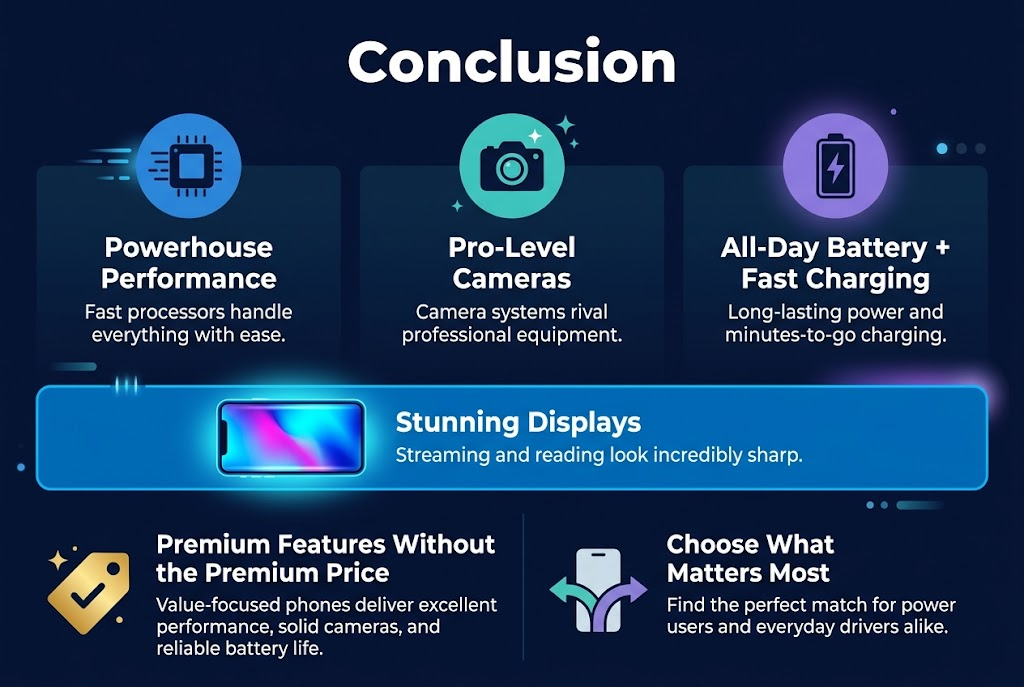
The smartphone landscape in 2026 has delivered some truly impressive devices that push the boundaries of what’s possible. From powerhouse processors that handle anything you throw at them to camera systems that rival professional equipment, this year’s phones offer something for everyone. The battery technology has finally caught up with our demands, giving us all-day power with lightning-fast charging that gets you back up and running in minutes. And those displays? They’re absolutely stunning, making everything from streaming videos to reading articles a visual treat.
What stands out most is how you don’t have to break the bank to get premium features anymore. The value-focused options prove that excellent performance, solid cameras, and reliable battery life don’t require a flagship price tag. Whether you’re a power user who needs the absolute best specs or someone looking for a dependable daily driver, 2026’s smartphone lineup has you covered. Take some time to think about what matters most in your daily phone use, and you’ll find the perfect match among these standout devices.